

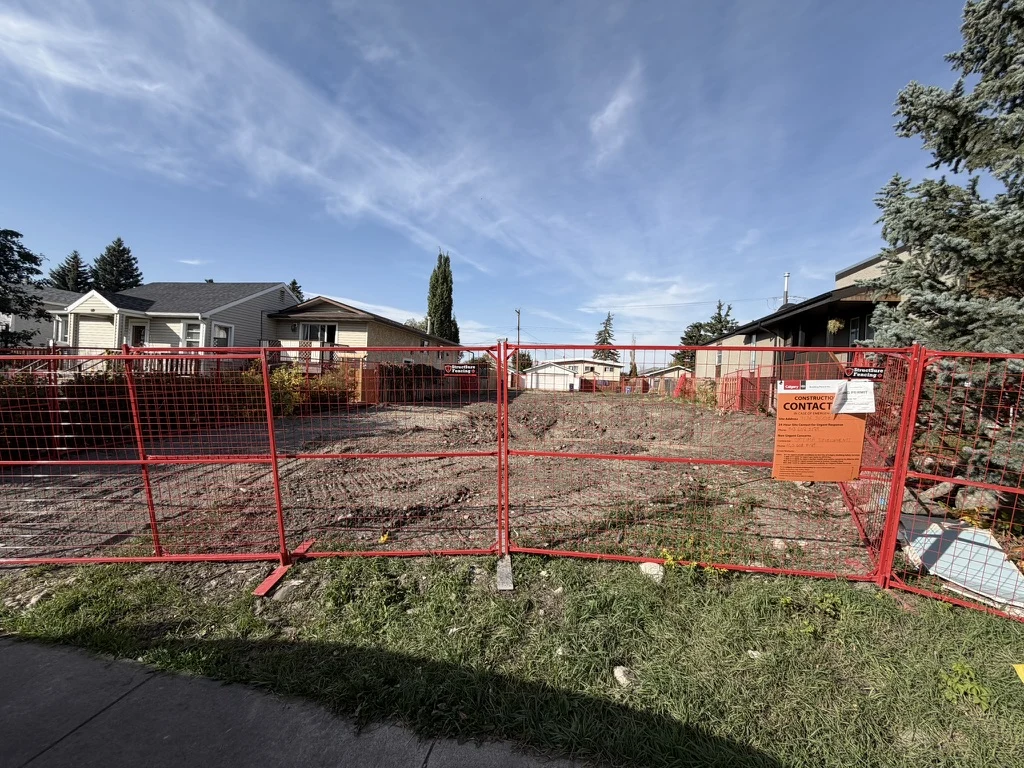
If you own property in Calgary and have been following redevelopment discussions over the last few years, you may have heard a lot about R-CG and H-GO zoning.
You may also have heard conflicting information about what is allowed.
There is a good reason for that.
Calgary implemented citywide residential rezoning in August 2024, making R-CG the base low-density residential district across much of the city. In 2026, City Council repealed that blanket rezoning and, effective August 4, 2026, many properties reverted to the zoning they had before the 2024 changes, subject to several exemptions.
That means landowners should be careful about relying on older articles, maps or assumptions about their property.
The first step today is simple:
Confirm the current zoning of the specific property.
From there, you can begin asking what that zoning actually means for redevelopment.
What Is R-CG Zoning?
R-CG stands for Residential – Grade-Oriented Infill.
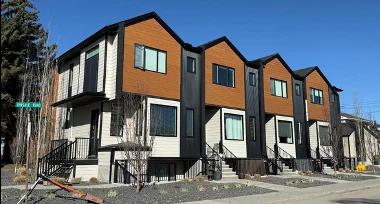
The City describes R-CG as a district intended to accommodate grade-oriented housing forms including rowhouses, townhouses, duplexes, semi-detached dwellings and cottage housing clusters, along with secondary and backyard suites in appropriate circumstances.
In practical terms, R-CG is designed to allow more housing variety than traditional single-detached zoning while maintaining a relatively low-rise, ground-oriented residential form.
Current City information identifies a maximum R-CG density of 75 units per hectare, although the feasibility of any particular project still depends on the parcel, building form, setbacks, parking, servicing and other Land Use Bylaw requirements.
For a landowner, R-CG can create meaningful redevelopment potential.
But it does not mean that every R-CG lot can automatically support the same project.
What Is H-GO Zoning?
H-GO stands for Housing – Grade Oriented.
It is a higher-intensity residential district than R-CG, while still focusing on housing that maintains direct ground-level relationships with the street or site.
The City describes H-GO as accommodating residential development where units may be attached or stacked within a shared building or cluster of buildings, at a scale intended to remain compatible with lower-density residential areas.
Historically, H-GO has generally been directed toward locations where additional density is considered appropriate, including areas identified through Local Area Plans and locations along corridors or streets suited to greater housing intensity.
The key distinction is that H-GO can allow a more intensive form of development than R-CG.
That can create additional opportunities, but it can also introduce more design, planning and construction complexity.
R-CG vs. H-GO: The Practical Difference
For a property owner, the simplest way to think about the two districts is:
R-CG: lower-intensity, grade-oriented infill.
H-GO: higher-intensity, grade-oriented housing that may include attached or stacked units.
That does not mean H-GO is automatically “better.”
A higher-density zoning designation only creates value if the property can physically, financially and practically support the additional development.
More density can mean:
- more units;
- more rental revenue;
- better use of expensive land; and
- potentially stronger development economics.
But it can also mean:
- more complicated building design;
- additional parking considerations;
- increased servicing requirements;
- higher construction costs;
- more demanding approval requirements; and
- potentially longer development timelines.
The better zoning is the zoning that supports the best feasible project, not simply the highest possible unit count.
The 2026 Zoning Changes Matter
This is where the current situation becomes important.
In April 2026, Calgary City Council approved the repeal of the citywide blanket rezoning introduced in 2024. The changes took effect on August 4, 2026. Many residential properties were returned to their pre-2024 zoning.
However, not every property reverted.
The City established exemptions for certain properties, including some parcels that had already received approvals, submitted applications within specified periods, or undergone separate owner-initiated rezoning processes.
As a result, two properties that appear similar and sit in the same community may now have very different development rights.
This makes property-specific due diligence more important than ever.
Do Not Assume Your Property Is Still R-CG
During the 2024–2026 period, many Calgary property owners became accustomed to seeing R-CG associated with their land.
That may no longer be the case.
The City has reinstated several former low-density residential districts, including designations such as R-C1, R-C2, R-1 and R-2, while retaining R-CG and H-GO as active districts where applicable.
Before evaluating redevelopment potential, we therefore want to confirm:
- the property's current land use designation;
- whether the parcel was affected by the 2026 changes;
- whether an exemption applies;
- the applicable Local Area Plan;
- surrounding zoning;
- nearby redevelopment patterns; and
- whether a land-use redesignation could make sense.
Can a Property Be Rezoned to R-CG or H-GO?
Potentially, yes.
A property that does not currently have the desired zoning may still be a candidate for a land-use redesignation.
But rezoning is not automatic.
The application needs to be considered in the context of City policy, surrounding development, infrastructure, community planning and the suitability of the particular location.
There are still active Calgary applications seeking redesignation from R-CG to H-GO, which illustrates that the two districts continue to serve distinct development purposes.
For that reason, we do not start by assuming a rezoning application will be successful.
We start by asking whether pursuing one makes sense.
Zoning Is Only One Part of the Development Equation
This is one of the most important things for landowners to understand.
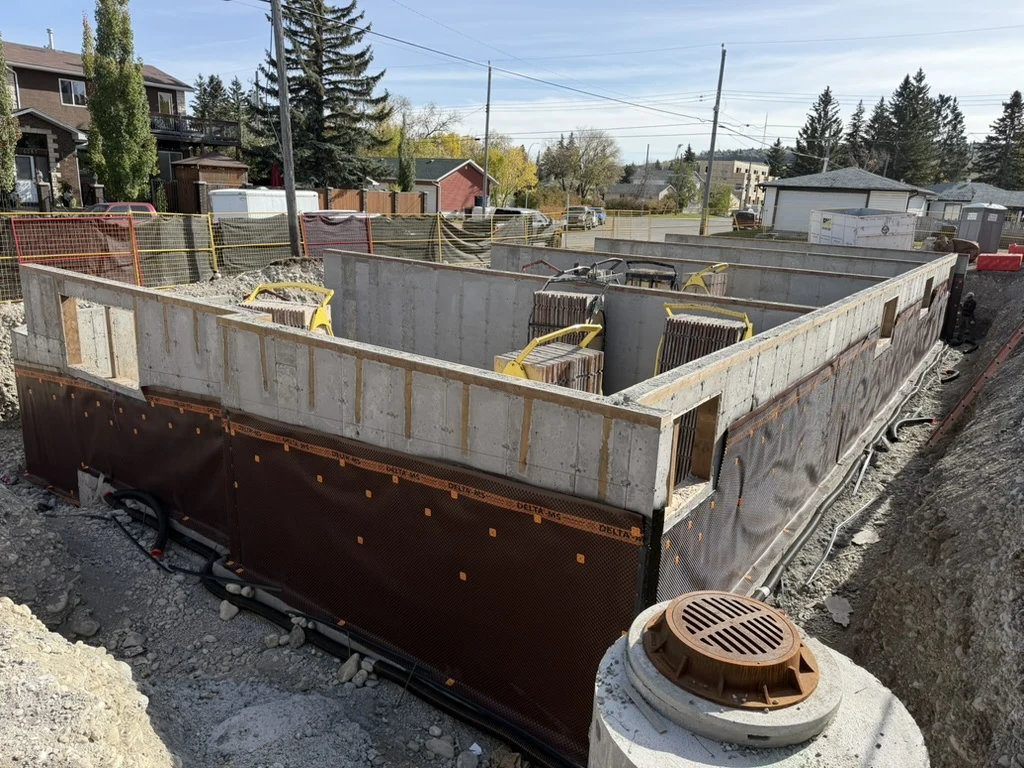
A favourable zoning designation does not automatically create a profitable project.
After reviewing zoning, we still need to consider:
Lot dimensions
Width, depth and parcel configuration have a major impact on what can physically be designed.
Access
Rear-lane access, parking, garbage collection and site circulation can materially affect the project.
Servicing
Water, sanitary sewer, stormwater and utility capacity can affect both feasibility and cost.
Construction efficiency
A concept that technically fits may still be too expensive or inefficient to build.
Market demand
The type and size of units need to make sense for the neighbourhood and intended renter.
Financing
The project needs to support a viable financing structure and sufficient operating income.
Development economics
Ultimately, land value, construction cost, financing cost and projected revenue all need to work together.
That is why Optima looks at zoning as the starting point, not the conclusion.
What Should a Calgary Landowner Do First?
If you are wondering whether your property has redevelopment potential, you do not need to hire an architect or prepare a full development plan before asking the question.
Start with:
1. The property address
2. Approximate lot dimensions, if available
3. Any survey or Real Property Report you have
4. Your objective
Your objective might be:
- selling the property;
- maximizing its redevelopment value;
- developing it yourself;
- retaining ownership of the completed rental property; or
- partnering with an experienced developer.
Once we know the property and the objective, we can begin evaluating the realistic options.
Own Property With Development Potential?
Calgary's zoning environment continues to evolve, and older assumptions about a property's development potential may no longer be accurate.
Optima develops, builds and owns purpose-built multi-family projects in Calgary and works with landowners to evaluate redevelopment opportunities from both a development and construction perspective.
If you own property and want to understand what may be possible, the first conversation does not need to be complicated.
Start with the address.
This article provides general information only. Land use designations and development requirements vary by property and can change over time. Current zoning and applicable City of Calgary policies should always be independently confirmed before making development or investment decisions.